

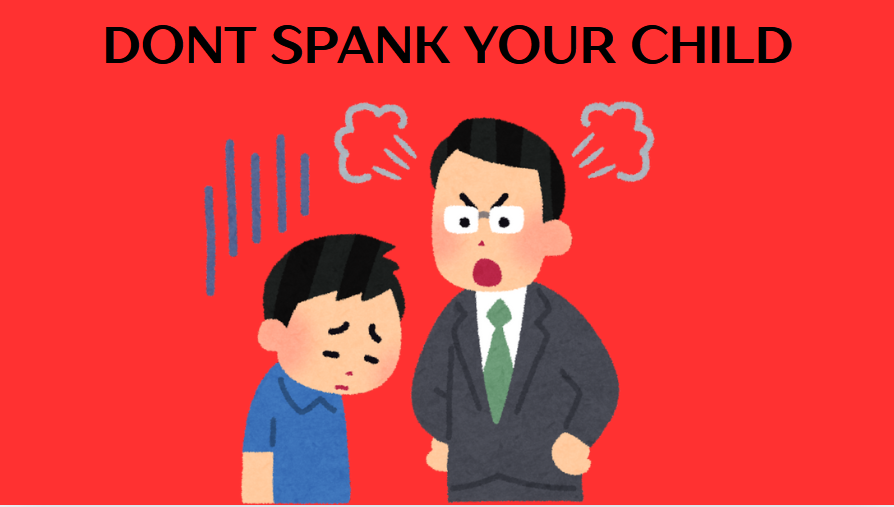
When children are acting out or having a meltdown, some parents spank them to try and get them to behave. Spanking has become controversial as some believe it’s OK to spank your child while some are strictly against it.
However, spanking your child is wrong, ineffective and can actually lead to more harm than good.
In today’s world, spanking a child could be considered a form of abuse. Spanking leads to numerous negative effects on children that could linger into their adulthood, such as increased aggression and antisocial behavior, according to the American Psychological Association.
Spanking children has been proven to have devastating effects on child development and children’s brains. Some side effects of spanking children include negatively affecting their mental health, creating negative parent-child relationships and increasing the risk of a child being physically abused, according to the National Library of Medicine.
Parents may not believe spanking their children leads to any long-term harm, but it does. Spanking your children can give the impression violence is OK, when it is definitely not OK. In addition, studies show that children who get spanked have lower IQs.
Even though two-thirds of Americans still approve of spanking their children, spanking is ineffective compared to other forms of punishment. Instead of spanking children, we should rely on other ways to correct behavior that aren’t physical. For example, we can put children in time-out, set limits, get someone else involved or recognize their positive behaviors, according to an article from NIU’s Child Development & Family Center.
This isn’t to say that children shouldn’t be punished for misbehaving, because they should be – just not physically. Overall, society should not be spanking their children, and should instead reward good behavior or come up with alternative punishments instead of spanking.


Susan • Jan 14, 2026 at 11:39 pm
Not every situation is the same and not every child is the same. There are studies that purport to show correlations between spanking and negative outcomes, but a correlation is not the same as a cause. Even if we take those studies at their word, every child is an individual and not a statistical average, and therefore a strategy that is good for one might be terrible for another, even if we agree that the studies are reliable.
A parent shouldn’t jump to corporal punishment for everything. But experience and observation tell me that a particular child might not retain a particular lesson at a particular time without a spanking. It must remain a parent’s choice.