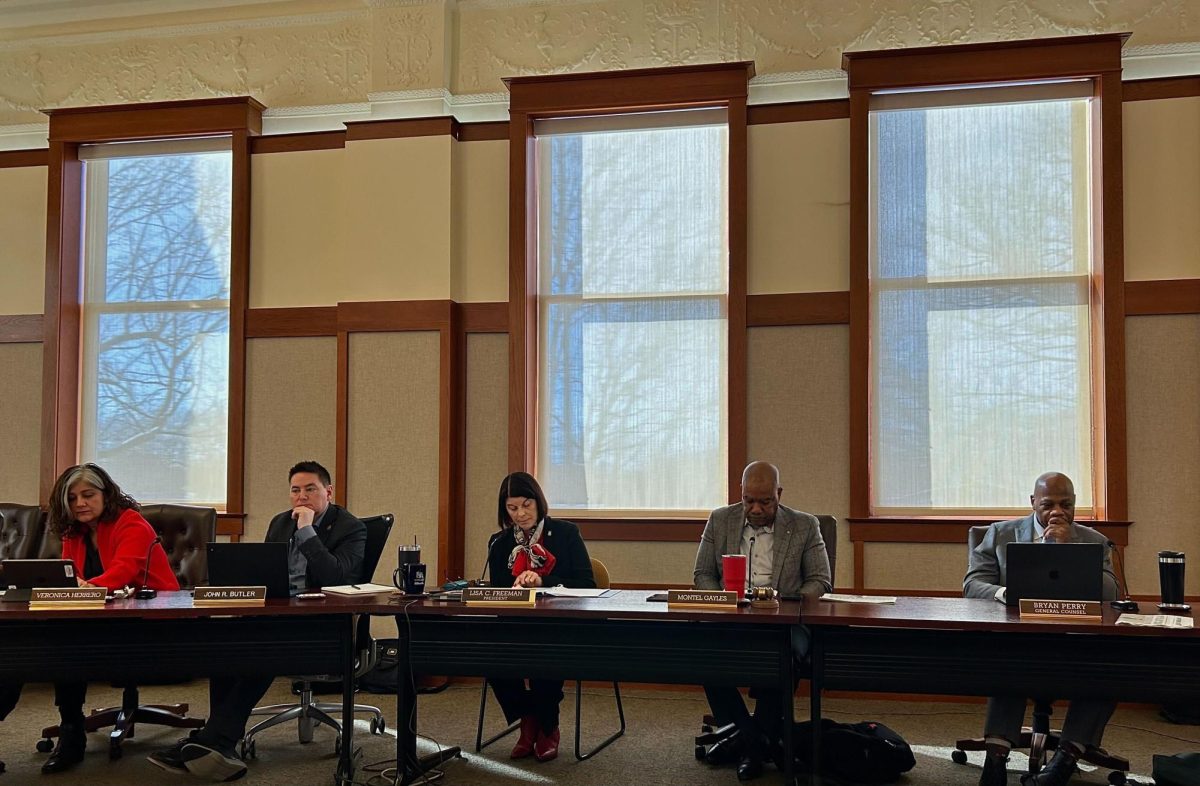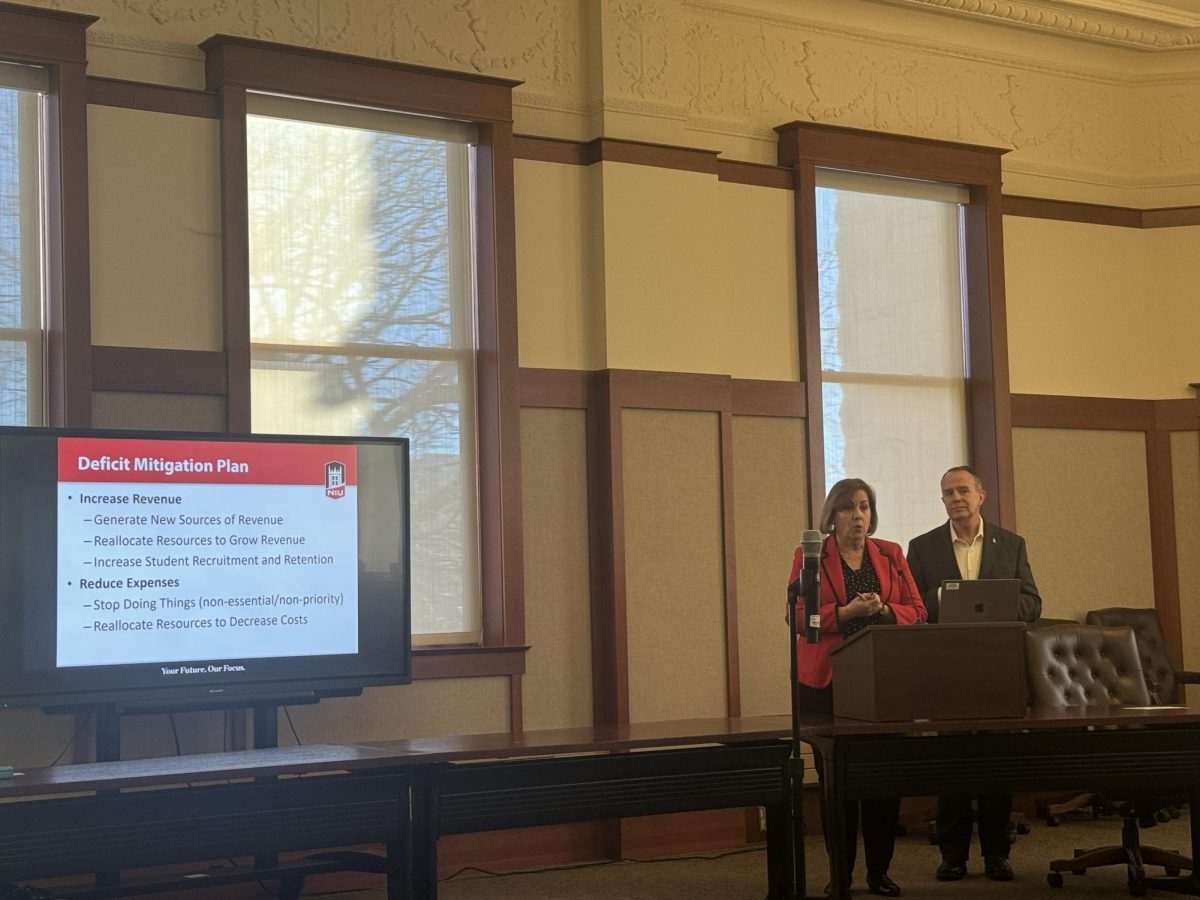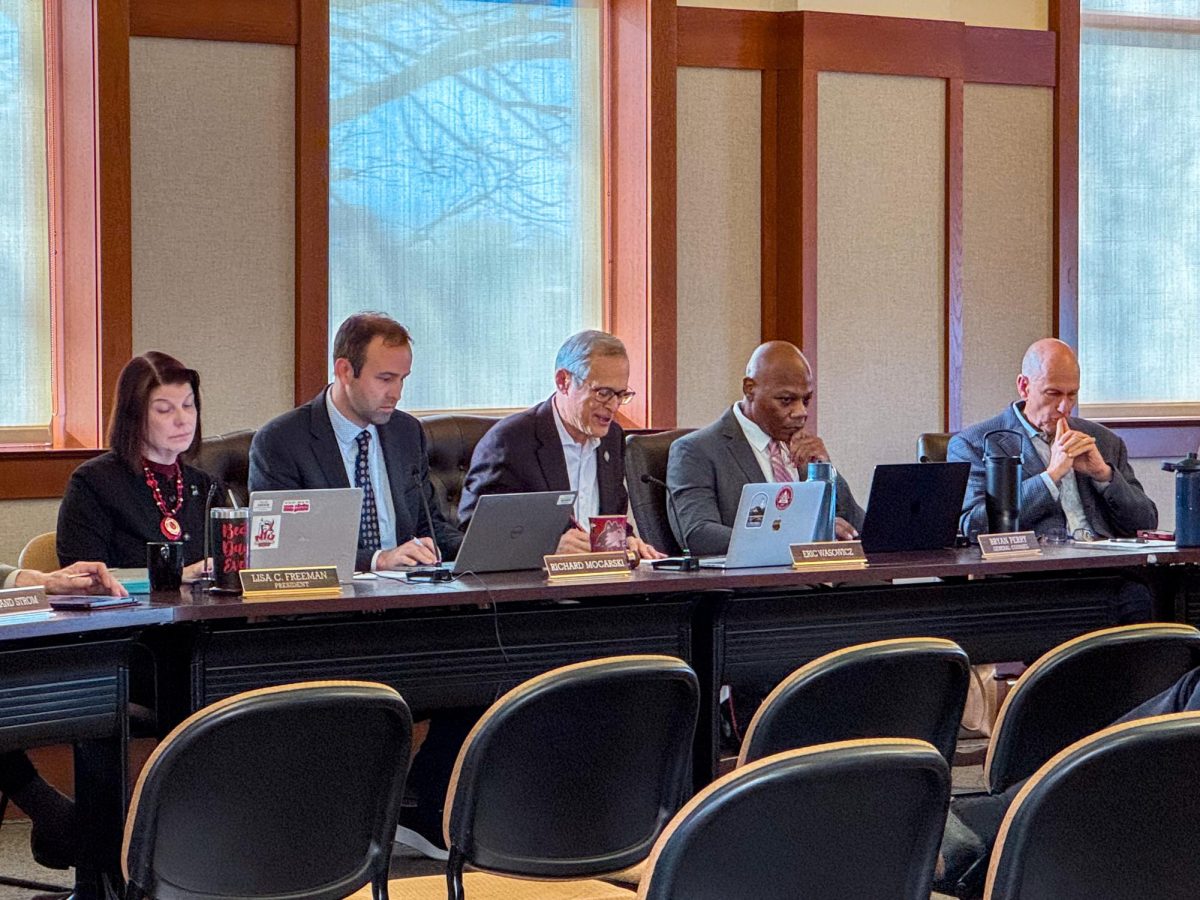
DeKALB – The NIU Board of Trustees met Nov. 13 to address concerns over a projected $1.9 million budget deficit the university expects to face within the coming year.
To achieve a balanced budget of $0 in deficit, the university plans to implement more aggressive financial positions and cost control measures, while also requesting additional funding from the state.
The board mentioned shared-service models as one of the cost control measures the university will use to manage the budget.
Chief Financial Officer George Middlemist explained that shared-service models are intended to improve efficiency and cut costs by consolidating redundant or duplicate positions, typically after they become vacant.
“When you think about universities, that tends to be a lot of administrative functions. Universities can be very central or very decentralized,” he said. “And so when you’re talking about a shared-service model, you’re actually trying to figure out a way to do both.”
Middlemist elaborated on where and why service-models are used by universities.
“HR, IT, accounting, budget — those tend to be the functions that we look at for shared-service models to eliminate some of that duplicative effort,” he said. “Shared-service models are really about becoming more efficient, reducing some of the duplicative effort that we have on campus, be more consistent in the services that we’re delivering, be more reliable, be more supportive, all of those things.”
Middlemist also described an energy saving project the university is currently implementing to eventually cut costs.
“We’re looking at ways to drive down utility costs, drive down our carbon footprint and replace much needed infrastructure,” he said. “The cost savings are not as significant in the beginning of the project because we had to finance it. But we’re going to realize somewhere in the neighborhood of $100,000 to $200,000 a year in cost savings from just that alone.”
The board discussed a plan to request $130.6 million in funding for Fiscal Year 2027. Base operation costs at the university would receive $129.7 million, and the remaining $850,000 would support new programs such as NIU’s Summer Bridge Program and the Huskie First Initiative.
The Summer Bridge Program supports incoming NIU students’ transition to college, especially those admitted through holistic review, first-generation students and Pell-eligible students.
During a six-week summer session, participants take two courses: UNIV 101: University Experience and COMS 100: Fundamentals of Oral Communication, a general education requirement. Students may also live in university housing to build community and immerse themselves in the campus environment before the fall semester.
Throughout the program, tutoring, group projects, networking and social events aim to reinforce academic skills and support student success.
The Huskie First Initiative at NIU supports first-generation and low-income students by addressing challenges they face and expanding campus-wide resources. As a member of the First Gen Forward Network, NIU offers an opt-out support program and provides professional development to help faculty and staff in finding the best practices to support students’ academic success.
The university also plans to expand bilingual services in areas such as admissions, financial aid and financial advising to better engage students and their families.
An update on the Baustert Bahwell Health Technology Center construction project was also presented to the board. The project’s budget is approximately $100 million, with an additional $40 million donated by the JTB Family Foundation. Construction is set to begin in 2026 and finish in 2029.
The board will meet again at 10 a.m. Thursday in Altgeld Hall, Room 315.