The 80th session of the General Assembly of the United Nations began on Sept. 9. The session has been renewed every year since 1945, but generally, the most interesting part of each annual session is the opening general debate that includes a statement by the heads of state of each UN member country.
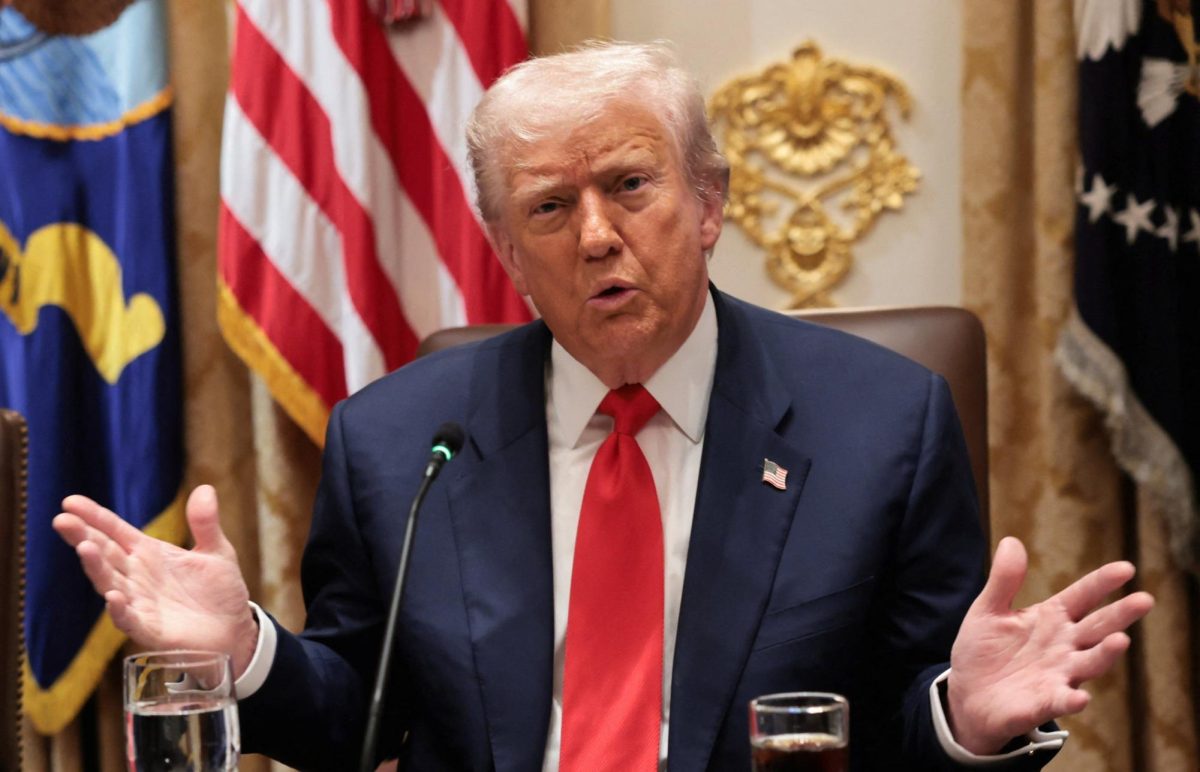
One of the most shocking interventions was President Donald Trump, who, in the midst of his attacks against his own organization, repeated a phrase that has demarcated part of his foreign policy in recent months, and not in a good sense.
“I have finished seven wars in seven months,” Trump said.
Since then, numerous media outlets like BBC, CNN and AP News have challenged the accuracy of the phrase.
After Israel and Hamas traded hostages on Oct. 13 in a step toward peace, Trump added another victory to his bold claim.
“Yesterday I was saying seven, but now I can say eight,” Trump said.
And for every geopolitical enthusiast, a question will have arisen upon hearing this sentence. What wars are Trump referring to? It is no longer the point where he may or may not have finished eight wars in eight months, it is asking whether eight wars have even occurred.
How real and decisive has Trump’s intervention in these conflicts been? Have they really ended? Let’s start with a basic concept. Peace is not merely the absence of war; nobody cannot believe in such an innocent idea because then many places in the world would be at peace, in the absence of a formal war between two armed organized actors.
“True peace is not simply the absence of tension; it is the presence of justice,” reads a quote from Martin Luther King Jr. displayed on the south side of his monument in Washington D.C. “It is necessary to love peace and sacrifice for it. We must concentrate not only on the negative expulsion of war, but on the positive affirmation of peace.”
With these phrases in mind, said by the winner of the 1964 Nobel Peace Prize, here is a review of each and every “war” that Trump supposedly ended.
Israel and Hamas
The war between Hamas and Israel came to an official end on Oct. 13, when both sides signed a deal overseen by the United States, Egypt and other Middle Eastern countries. It wasn’t the first time both sides reached a ceasefire during the war, but any precedent ceasefire was broken.
After several failed attempts by the U.S. to impose its conditions on both sides, where Netanyahu and Hamas openly played with Trump by convincing him in various ways to support his interests or curb the other side, an agreement was finally reached.
Trying to get the deal out as quickly as possible in order to win points for the Nobel Peace Prize has left a mediocre deal, which neither side actually accepted.
The imminent outbreak of the continuation of this war left Trump in a bad place. But Netanyahu has the need to continue the conflict in order to secure political support from Israel’s more ultra-conservative parties, while Hamas has to show that it can remain a threat to the existence of the Jewish country – the terrorist group’s fundamental axis.
Cambodia and Thailand
Cambodia and Thailand were involved in a skirmish-like conflict rather than a full-blown war. This skirmish isn’t a novelty in that region, it is just another event of an unresolved conflict over several decades, because of a territorial dispute.
The difference between this skirmish and any other in past times was that between the de-escalation of the conflict there was a call from Trump to the leaders of both countries to sign a ceasefire, with the threat of increased trade tariffs included. However, the root cause of the conflict hasn’t been touched, so tension between the two countries continues.
While U.S. pressure was key to signing the ceasefire, it is just that – a ceasefire. None of the countries have achieved the strategic objective they sought with this confrontation and it is to be expected that hostilities will continue.
Israel and Iran
Israel and Iran engaged in a low-level armed confrontation, in which Iran was completely crushed by the superiority of the Israeli air force, which is backed by the U.S.
After the 12-day war, Iran allegedly continued to develop its nuclear program for non-peaceful purposes, since no casualties or radioactivity were detected at Fordow. There was never a firm agreement for Iran to stop the search for a nuclear warhead and they have not stopped their proxy attacks in different parts of the world, being the most recognized of the Houthies of Yemen.
Trump gets into the conflict just to honor his acronym Trump Always Chickens Out – TACO – and is constantly changing his opinion and strategy until he chooses the most rational solution: bombing Iran once more.
India and Pakistan
India and Pakistan engaged in a conflict over a terrorist attack by Pakistani extremists against Indian tourists in Kashmir. This fact revived one of the longest and most important conflicts of the 20th century, the only one between two nuclear powers with the capacity to destroy themselves.
After four days of attacks, Trump posted that both countries had reached an agreement after a long night of talks. However, India denied the main reason for the agreement was U.S. intervention.
In fact, India claimed the channels of communication used for the crisis were those between the top military commanders of India and Pakistan. More neutral sources in the conflict claim the U.S. may have played some role as manager, but this role would be less.
Rwanda and the Democratic Republic of the Congo
The war in the Congo is probably one of the bloodiest and wildest since the end of World War II, as it is known as the African World War due to the involvement of various nations in the conflict.
Trump is credited with putting an end to this war after having brought together delegates from the Democratic Republic of Congo (DRC) with Rwanda. But in this sentence alone there are several problems. Although Rwanda was constantly in conflict with the DRC, they do not have a direct confrontation since Rwanda provides funding to various rebel groups in the Congo.
One of these groups is the M23 who have not stopped besieging government forces since the beginning of this year. And the war is still going on, just two weeks ago several incidents were reported, and some sources indicate M23 intends to advance to Kinshasa, capital of the DRC. It doesn’t sound like there’s peace.
Egypt and Ethiopia
Despite the role of Ethiopia in an armed conflict with Djibouti and Eritrea, relations with Egypt and Sudan have remained tense. The dispute stems from the control of the Nile tributary, since Ethiopia has built dams on the higher part of the river, which worries Sudan, but especially Egypt, whose economy is dependent on the flow of the Nile and that it does not overflow.
However, there has not even been a single skirmish between Ethiopian and Egyptian troops, perhaps because these countries not only do not share a border, they are at a distance of more than 2000km. But for some reason the White House considers these countries formally entered into war and, moreover, that Trump resolved the conflict. The only precedents of talks between Egypt and Ethiopia with the U.S. as mediator are from 2020.
Serbia and Kosovo
Serbia and Kosovo were former members of Yugoslavia, with Serbia being the heir to the Yugoslav crown and Kosovo one of the countries seeking independence from Belgrade. Consequently, both countries entered a bloody war in 1999.
Since then, beyond tensions between both countries, no conflict or activation of armed forces has been reported for the purpose of starting a new war in Kosovo, which means that Trump invented a war to end it.
Armenia and Azerbaijan
These two former Soviet republics of the Caucasus have been in constant conflict for the last five years because of a territorial dispute in Nagorno-Karabagh, a crucial region for both nations.
The territorial division experienced by Azerbaijan added to the high percentage of Armenian separatists in Nagorno-Karabagh that were taking influence away from Azerbaijan on its western border, especially with several regions bordering Nagorno being de facto controlled by Armenia.
Tensions between the two countries date back to their independence as former Soviet republics in the 1990s, where they faced each other for the first time in a six-year war.The war ended with an Armenian victory. During this conflict, a part of the territory surrounding Nagorno-Karabagh declared its independence, becoming the Republic of Artsakh.
This republic would be an Armenian puppet state, reinforcing the separation of the Azeris and control of Nagorno-Karabakh. An attempt to reclaim the area ended in the second Nagorno-Karabakh war, only five years ago.
As we can see, the president lies to claim achievements that are not his own or are an illusion according to the definitions of peace given above.
It would be advisable for Trump to look up definitions of war and peace in a dictionary before meddling in other people’s conflicts. However, it is known that the only reason for doing all this assembly was to seek the Nobel Peace Prize.
Venezuela and Colombia have all the votes to be the next scene for Trump to boast of being the “manager of world peace,” and there will certainly be other fiascos in which Trump exaggerates his victory, however legitimate it is to overthrow a dictatorship.
Meanwhile, the same question remains for the next three years: How much is Trump willing to sacrifice to satisfy his arrogance and pride?