As a transgender person, I often struggle to find a restroom in public places that I am comfortable using.
I could just use the men’s restroom, but then I get worried about getting weird looks because I don’t exactly “pass” yet. Using the women’s restroom is also not an option for me, because that causes me even more anxiety and gender dysphoria.
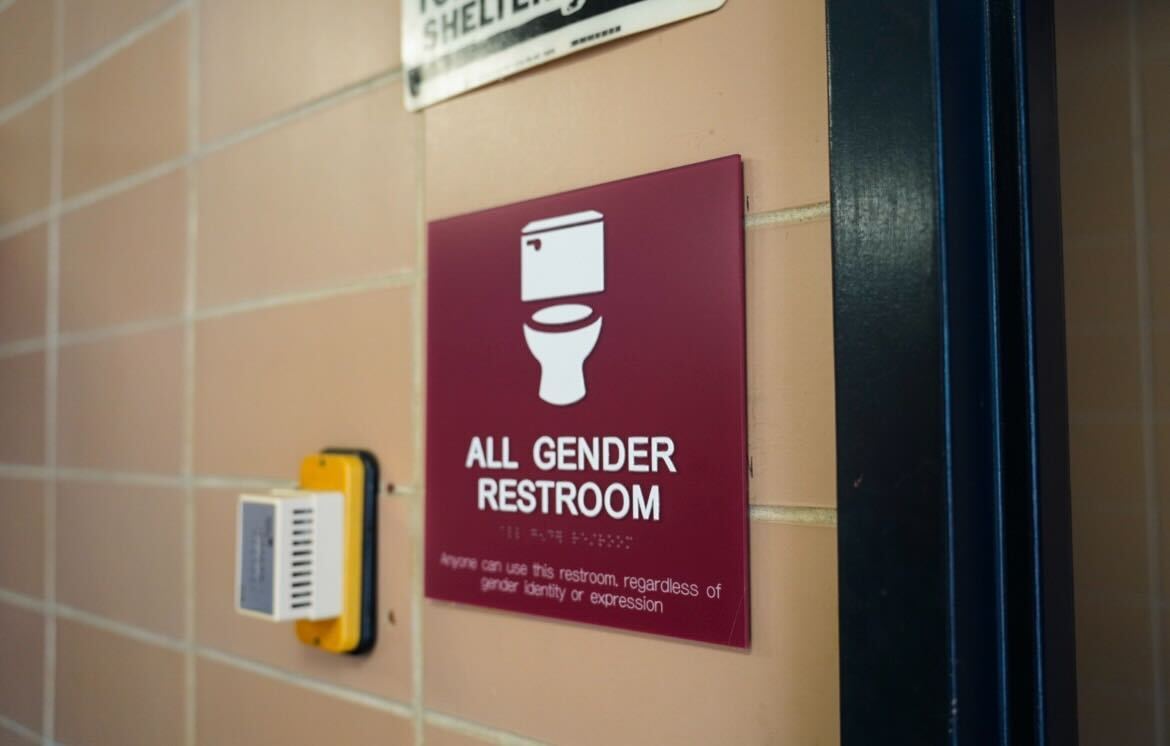
For these reasons, I often opt to look for a gender-neutral bathroom, but there are times where they are unavailable. In more recent years, gender-neutral bathrooms have become more common, but they should just be the norm.
Public bathrooms haven’t always been assigned gender. The first recorded gender segregated bathroom was in a Parisian ball in 1739. Before then, most public restrooms were either single-stall rooms, which were primarily for the upper class, or only for men, which strongly encouraged women to stay home.
Once public restrooms for women became available in the late 1800s, it was a huge step in the feminist movement, as now women were more encouraged to go out because they had somewhere to use the restroom.
We as a society have come a long way since the 20th century. Countless equal rights movements have led a wider diversity of people to have the same rights white men have always had. However, there are a lot of societal norms that still contradict the equality we have pursued.
The continued existence of gender segregated bathrooms is one of those norms.
A common reason that gender segregated bathrooms are enforced is for the safety of women. It’s argued that shared bathrooms could lead to violence for women, but the thought that women need to be “protected” is inherently sexist.
Regardless of if a bathroom is unisex or not, there’s nothing stopping anyone from invading someone’s privacy besides the people around them. Who’s to say that another woman won’t invade the privacy of others in the bathroom? Women are just as capable of sexual violence as men, so separating men and women for that reason is foolish.
Having more people in an environment also tends to discourage socially unacceptable acts. Putting up a “women only” sign on a restroom likely won’t deter a creepy man, but it will deter a nice man who would likely help in a bad situation.
Having bathrooms that accompany all people could actually be beneficial for this reason, as well as decrease the preconceived notion that women need to be protected from men.
Needless to say, the argument that allowing transgender people to use the bathroom that aligns with their gender is dangerous is completely misinformed and biased. Just like cisgender people, transgender people are capable of sexual violence but giving that stereotype to all transgender people is extremely dangerous to the transgender community.
If gendered bathrooms were abolished, this wouldn’t even be an issue. Everyone should get their own private stall to do their business and then wash their hands in the sink that everyone shares.
This way, people won’t even have to worry about their privacy being invaded and going to the bathroom in public doesn’t have to be a complicated task for anyone anymore.