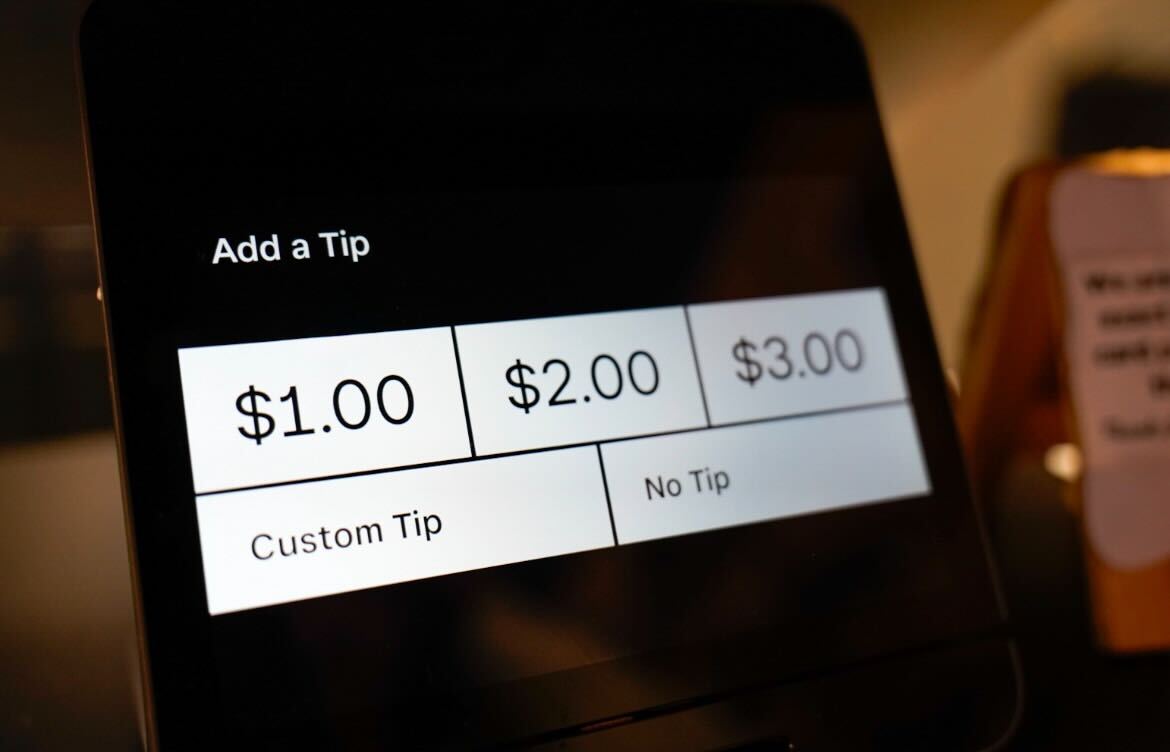
Tipping culture is something distinctly American. It is expected you leave a tip of 15-20% of your original total after receiving a service. Sit-down restaurant servers, tattoo artists, body piercers, hair stylists, nail artists, delivery drivers and valets are the usual recipients of tips.
This social norm is quickly changing, but not in the way you may think. It seems more often than not you will be asked to add a tip, even in situations where tipping has never been expected before. Even retail clothing stores are prompting customers to add more to their total.
In coffee shops, the innocent tip jar beside the register has started to collect dust. Instead, an obnoxious pop-up window stops you in your tracks if you dare to pay digitally.
Many choose to add a tip to avoid guilt. Who can ignore the innocent eyes of the cashier who spun a tablet around on a stand, knowing they make the same measly paycheck you do?
They don’t need it. Servers and other service providers often make below minimum wage and are expected to make up the lost income in tips. However, baristas and retail employees are paid at or above minimum wage.
Jasmine Vanegas, a sophomore psychology major, works weekends as a server. She gets paid $9 per hour, $6 below Illinois minimum wage.
“I understand people may not have the financial ability to tip, and that’s fine,” Vanegas said. “However, while you were sitting at the table for three hours during a busy night where I could have been making more money with other people, I do get a little bit upset.”
There has always been discussion about whether or not the U.S. should do away with its tipping culture. This conversation has become more prevalent in recent years because of the sheer amount of businesses starting to ask for tips.
Should someone who folds your clothes and bags them get an extra 15% for their effort? No.
There is no reason a retail store should expect its customers to make up its employee’s minimum wage. That’s what buying the product does.
However, the solution is not to avoid tipping service providers. Not tipping the people who depend on it will not affect the system that has been in place for decades.
Living on minimum wage is hard, but living depending on the generosity of others is even more difficult. There is a way to stop this practice from spreading to other businesses. It may be annoying to be constantly asked for money, but don’t be afraid to click no.
It is your choice whether or not you tip. Just be sure to tip your service workers instead. If you don’t, be prepared to spend your next night out getting bad service.