Many college students experience mental health concerns, but not all seek support. Recent data points to a gap between mental health needs and services used among college students.
The 2023-24 Healthy Minds Study, a national survey on college student mental health, found that 76% of students know where to seek professional mental health help, yet only 36% reported receiving counseling or therapy in the past year.
Despite this awareness, several barriers still limit access to care. According to the Healthy Minds Study, these include a preference to manage concerns independently or with family and friends, financial constraints and limited time.
At NIU, Counseling and Consultation Services (CCS) encourages students to access support early, offering short-term, flexible care tailored to student needs.
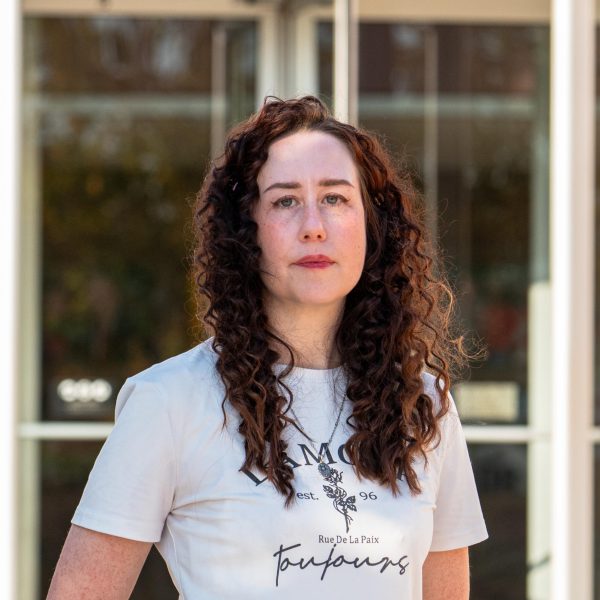
“When a student reaches out, that initial consultation is about a 20 to 30 minute video call with a therapist, usually within 24 to 48 hours,” said Angela Kaminski, director of Counseling and Consultation Services. “(Students) discuss what’s going on for them, how it’s impacting them.”
At the end of the consultation, the therapist and student discuss next steps.
“There’ll be a recommendation like, ‘Oh, it sounds like individual therapy would be appropriate,’ or maybe this is more of a group therapy fit, or perhaps sometimes it makes more sense for them to go in the community,” said Kaminski.
Though CCS offers short-term therapy, Kaminski mentioned how some may need to seek out another clinic for a different approach.
“In some cases a short-term model, which is what we are, is not the best fit. So we would recommend either another clinic on campus or encourage them to use their insurance for the community,” said Kaminski.
This determination is made after the end of the initial consultation with next steps following after.
CCS is sometimes described as offering 14 sessions, but Kaminski stressed the number is a guideline, not a hard cap.
“We’ve really kind of backed away from the 14 sessions. We don’t really focus on the number, because it’s really more issue based and clinically appropriate,” she said. “Our average is about six to eight sessions per student,” Kaminski said. “We would not cut somebody off at session 14 if it wasn’t clinically appropriate.”
If a student’s needs call for longer-term care, CCS helps with that transition.
“We’re still going to provide support to you to make sure you’re going to get what you need in that moment,” Kaminski said.
CCS asks about preferences and clinical needs when matching students with therapists, and availability is a practical consideration as the semester progresses. If the match doesn’t feel right, students can request a change.
Kaminski urges students to try counseling a few times with a therapist before deciding it’s not a fit.
“I usually say give it three sessions,” she said. “If they’re not feeling connected they can always reach out to the front desk and let them know. And then what typically would happen at that point is our clinical director would reach out and have a conversation about what the next steps might be able to look like.”
CCS also offers group therapy and a range of wellness programs designed to lower barriers to support.
“Group is actually something a lot of our students take advantage of, because there’s no limits on that,” Kaminski said.
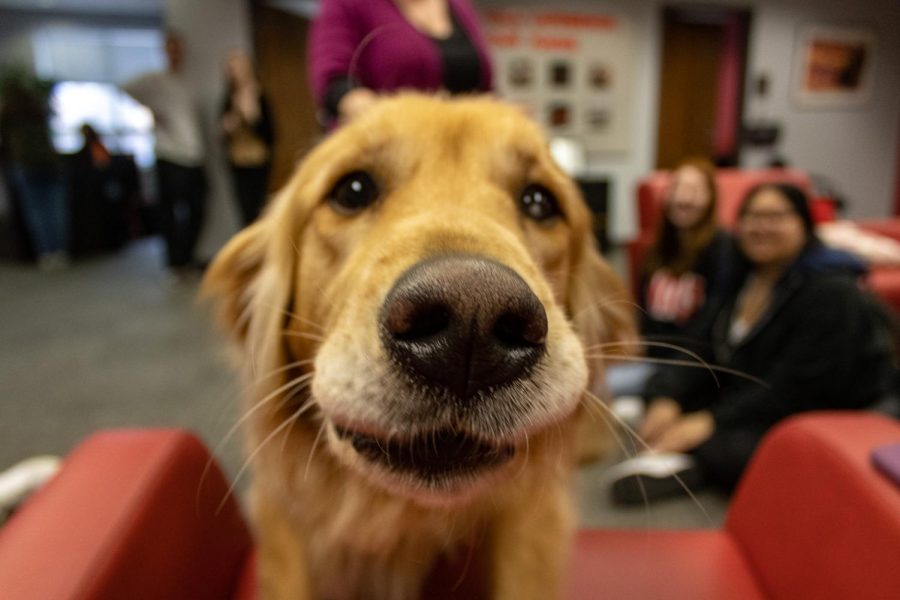
She pointed to recurring programs such as the popular Procrastination Café, Crafting and Connection events, peer-support training and visits with a therapy dog.
“That’s my guy, my therapy dog, Chase,” she said. “We do that over in the OASIS space. You can just come hang out for an hour and love on him, and he loves to love on you back.”
Feelings of loneliness and isolation have been a growing concern locally and nationwide. The American College Health Association’s spring 2024 survey found nearly half of students, 48.5%, screened positive for loneliness on the UCLA Loneliness Scale.
“Loneliness and isolation actually has been one of the growing concerns that we’ve seen, not only here on campus, for us at NIU, but it’s a nationwide increase that’s being seen,” KaminskI confirmed.
Students who want to schedule an initial consultation can call Counseling and Consultation Services at 815-753-1206.