“Star Wars” is probably the best-known space franchise in the world. Although “Dune” and “Star Trek” came out earlier, “Star Wars” became a cultural phenomenon that has endured for three generations.
Throughout the films – the main audiovisual product of the saga – there have been several changes in the direction of Lucasfilm, the company that produces “Star Wars” and “Indiana Jones.”
Since its foundation in 1971, Lucasfilm has been the personal production company of George Lucas, the genius behind “Star Wars” and the “Indiana Jones” trilogy alongside Steven Spielberg. However, in 2012 Disney acquired Lucasfilm, and new President Kathleen Kennedy took over the creative leadership of “Star Wars.”
While this movement revitalized the franchise with many new products, the quality of these, especially the trilogy of sequels that make up the numbered episodes, to be specific Episodes VII, VIII and IX, have created a great deal of discontent in the fandom.
Since 2012, “Star Wars” has released three films from the original line, plus two other anthological films and two more in development, as well as a large number of animated series, live-action and also anime, thanks to a collaboration with Japanese production companies to create “Star Wars: Visions.”
However, Kennedy has been openly criticized for the creative intervention in the development of the saga, with Episodes VIII and IX being by far the most controversial products.
These films have moments that not only do not fit into the lore of “Star Wars,” they are directly nonsensical in the context, or the script seems more like a repetition of the narrative formulas of the original trilogy.
Kennedy was replaced as president of Lucasfilm earlier this year by Dave Filoni. It seems that Disney has listened to the “Star Wars” fans’ criticisms.
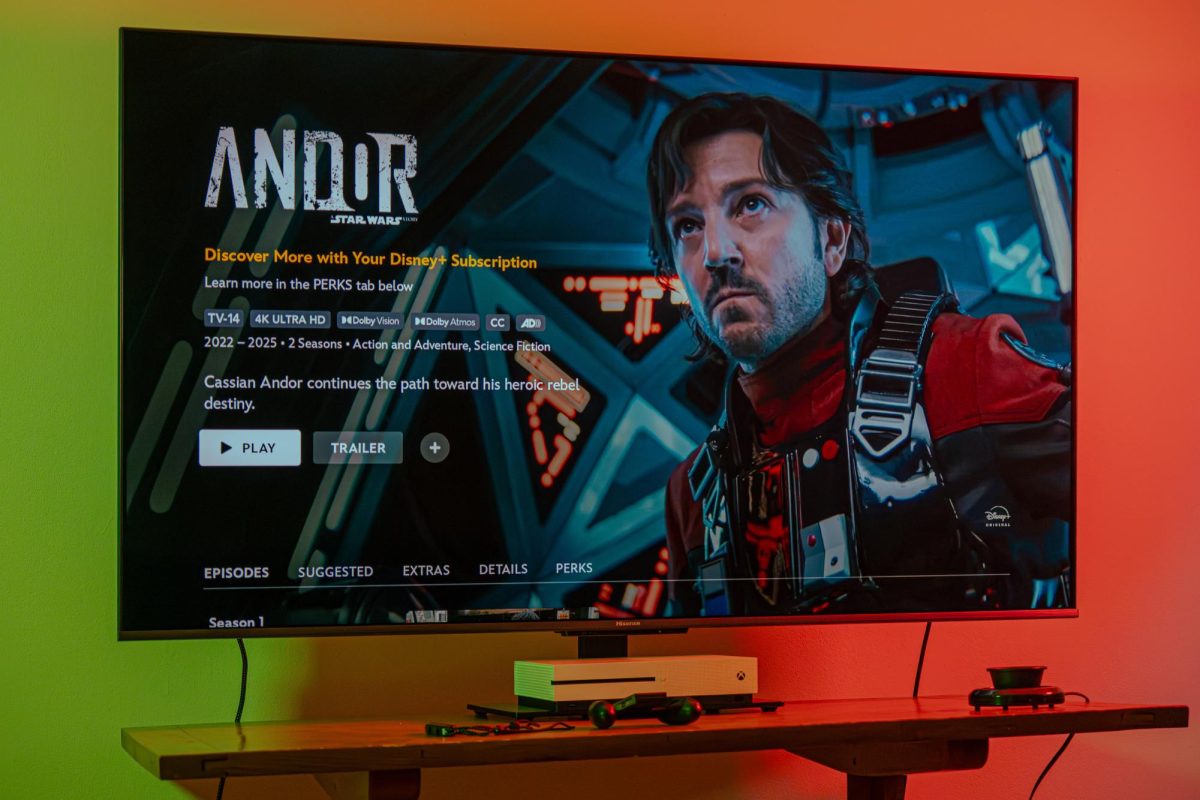
Products in which creative direction has been done by Dave Filoni or Tony Gilroy, screenwriters, producers and directors with a past in Star Wars have been completely acclaimed by both critics and fans of the series. The dichotomy between innovation and tradition has not only specific films and series, but faces that represent both movements within “Star Wars.”
Contrary to popular belief, “Star Wars” is far from a children’s saga. Corruption, genocide, wars, political plots, economic blockades and horrible ways of dying are the most common themes within the franchise, which causes the public to interact with grown-up topics.
That’s why the sequels had such a divided reception, since they not only represented one more step in the political ideology agenda that Disney has been having since the 2010s. In not about the political content in the movies, is the political ideal that these movies expressed, when feminism was at its pike.
“Star Wars” is a franchise set in an entire galaxy, diversity is taken for granted, so forcing gender or race diversity is both inopportune and unnecessary (like the famous case of “Mary Sue” with Rey or the overrepresentation of certain races and genders in the Galactic Empire in games like “Star Wars: Squadrons” when the Galactic Empire is supposed to be a nazi representation), especially when changing rules of the universe that have been taken for granted for decades.
In turn, it is no secret that the sequels suffered problems in script writing and the film-to-film sequel after the poor reception of “Episode VIII.”
On the other hand, the arrival of “The Mandalorian” TV show in 2019 meant a renewal for the franchise, not to mention the original stories and new characters like “Grogu” that led to its global popularity. The aesthetics of the series are reminiscent of the original trilogy, but with a touch of elements from comics and animated series prior to the purchase of Lucasfilm.
It is nostalgic, but well measured, while exploring a period never seen before, at least on the screens, which is the Age of the New Republic, which narrates from “Episode VI” to “Episode VII,” a 30-year period full of political changes, skirmishes and the time in which the mysterious First Order arises.
It is in turn a mirror view of what has been left behind. “Star Wars” always had a main timeline, composed of the films and animated series “Clone Wars.” However, by 2012 there were hundreds of comics, games and other products that had created a timeline of millions of years. In 2014, Lucasfilm decided to revive “Star Wars” without this “Expanded Universe” that came to be called Legends, and the sequels marked the beginning of a new continuity from episode VI.
However, Dave Filone, along with his other collaborators, took the trouble to read these stories and adapt them into the new series, taking the main plot or sometimes just details, but these kinds of actions are what older fans appreciate, feeling that his entire experience with the saga is not being forgotten as they once thought it would be.
With the new direction, “Star Wars” takes a much brighter course, while nostalgic toward a galaxy far, far away.