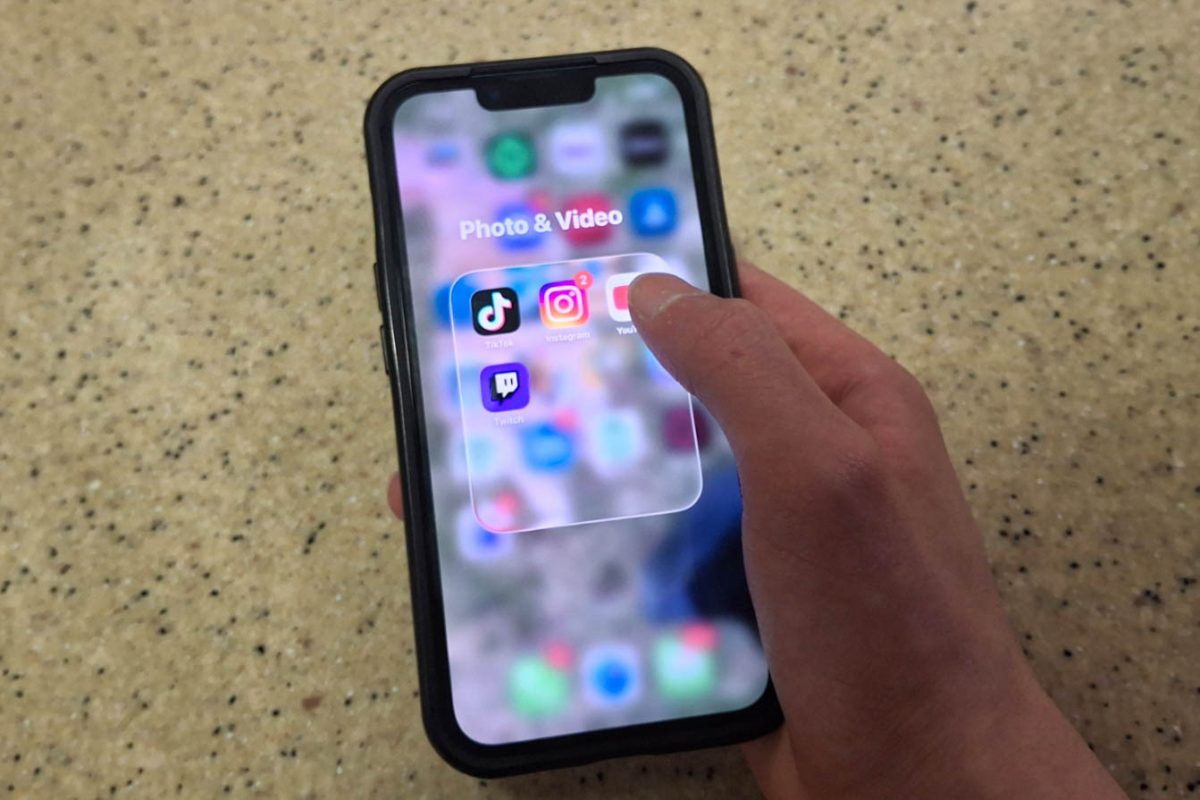
In this day and age, it seems nearly impossible to have a social life without social media. Because people are constantly posting about social events and communicating with others through the use of these apps, not having them tends to be seen as taboo.
When these apps were first created, the intent was to connect with anyone around the world. However, over time social media has slowly become more addictive by creating an algorithm catering to people’s interests and causing them to keep scrolling as they consume endless amounts of content.
It’s in this state of social media that we have started to see many issues emerging because of it, not just because of cyberbullying, FOMO and comparisons to others, but also because social media is causing cognitive decline to those who use it excessively.
In 2024, the word “brain rot” was the Oxford Word of the Year. It refers to the supposed deterioration of a person’s mental or intellectual state, especially viewed as the result of overconsumption of material considered to be trivial or unchallenging. It also refers to content characterized as likely to lead to such deterioration.
On platforms such as TikTok and YouTube shorts, an influx of “brain rot” content has emerged and become popular, particularly with younger people. I don’t need to explain the “6-7” meme to you, and it’s a perfect example of this phenomenon.
While it used to take some sort of effort to become popular on these platforms, nowadays people can post thousands of AI brain rot videos and get millions of views from people who are mindlessly scrolling through their phones like zombies. Considering that people can actually make money off of this content, there is no reason for them to quit making it either.
This content seems like a stupid cash grab, but the overabundance of social media in our lives has actual effects. Robert Rodriguez, a junior biology major, felt more impatient due to social media use.
“The other day, I was trying to look up ingredients to make a pizza and it wouldn’t tell me, like, it wasn’t giving me the results fast enough,” Rodriguez said. “I guess, in that aspect, I’m kind of impatient.”
Some of the biggest problems that emerge from people consuming too much of this content are a lower attention-span, decline in memory retention, decreased critical thinking skills and more impulsive decision-making. This is due to the instant gratification and the increase of dopamine people experience when they consume this content, which often leads to addiction.
Recent studies have shown that young people, especially preteens and young teenagers, who engage with social media a lot have reported having poorer reading, vocabulary and memory skills. Even those who report only using social media for an hour every day performed slightly poorer in these areas than those who don’t use social media at all.
The phenomenon of social media infecting our attention spans is even present here on campus.
Anna Halfpenny, a junior psychology major, noted that her attention span has decreased due to social media.
“If I’m working on something, I’ll get bored of it and want to go back to social media. So, my attention can get divided really easily,” Halfpenny said. “I think social media is good in some ways. I think it’s only good for connecting with people, but I think it’s really bad for trying to be productive and healthy.”
Quinn Lantry, a junior in computer science, talks about his instinctual reaction to open social media.
“If I am bored or just not knowing what to do, it is an instinct, instinctive subconscious reaction to maybe open up some form of social media to pass the time,” Lantry said. “And while I’m doing that, I’m not thinking much about what I’m doing.”
Social media can be a great tool to connect with people around the world and keep in touch with those who live far away, but many of those apps aren’t being used for those purposes.
The quality of content on social media should be more heavily monitored to ensure that there isn’t any “brain rot” for people to get sucked into. These apps should focus far more on human connection than on likes and views because that’s what they were originally made for.