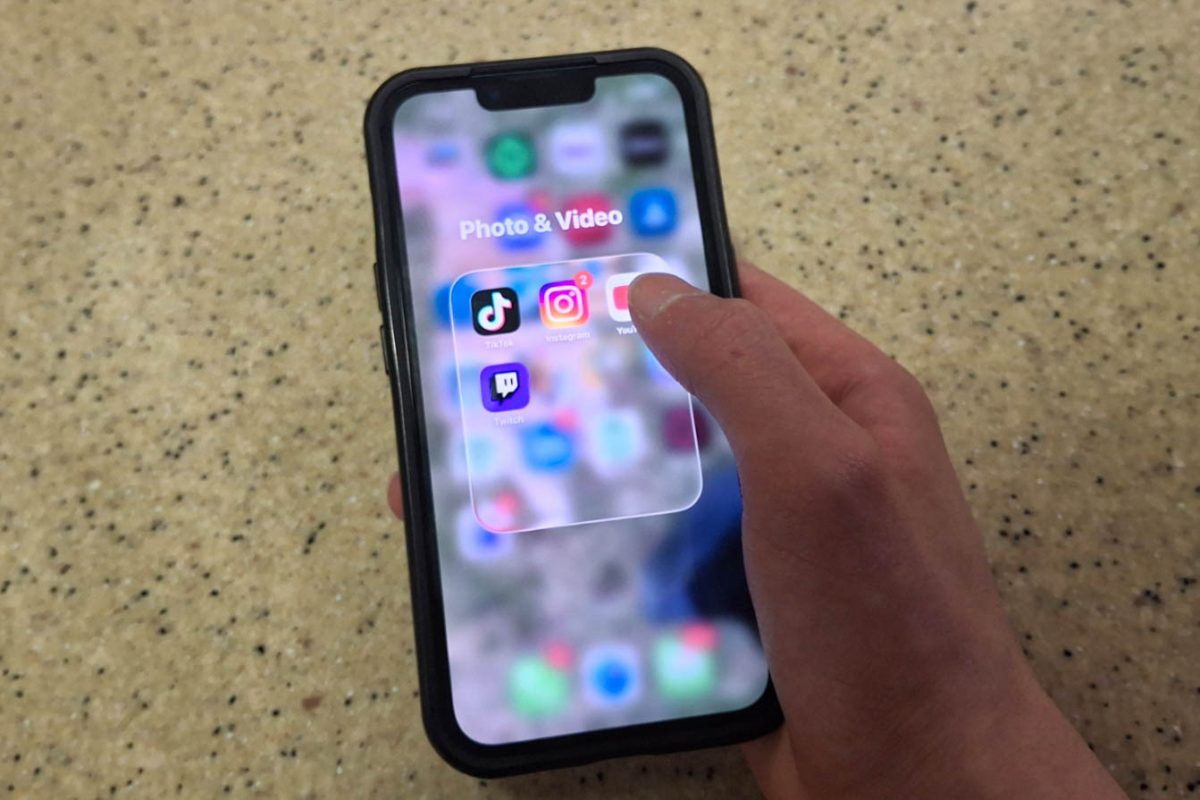
As social media continues to dominate our lives, some people have decided to take a step back from it temporarily to reset their mental and physical health. People deciding to start social media detoxing is not just a trend or fad, but instead a response to the negative effects social media has.
According to a 2025 poll done by the American Psychiatric Association, 62% of adults feel anxious without their phone, with 50% of those polled claiming to limit their social media in the year 2025.
Suzanne Degges-White, a chair and professor in the Department of Counseling and Higher Education, said the problem with social media is how it interferes with our lives.
“The prolonged (use of social media) you know, greater anxiety, greater depression. There’s disruptions to sleep patterns, there’s relationships suffered due to constant comparison and options of someone better so physical, mental, well being, relationship well being, all the research suggests that prolonged use is doing damage to the human body and to our relationships and ability to function,” Degges-White said.
According to Degges-White, the issue resembles addictive behavior, especially when it impacts responsibilities and real-life relationships.
“When you find yourself picking up your phone more than four to five times in like a 15 minute period. When the use of it is getting in the way of your real life responsibilities or your real life relationships,” she said.
Young people, such as those between adolescence and young adulthood are the most susceptible to the negative effects of social media usage. In that stage of life, people are developing their own sense of identity and habits which makes them more susceptible to addiction to social media.
“We’re forming our brains, how we look at relationships, how we look at life,” Degges-White said. “Those are some really kind of key periods where we’re learning to meet and connect through a device versus through face-to-face contact.”
Degges-White pointed out that social media platforms such as TikTok and X are designed to keep users engaged and are addictive.
“It’s totally addictive. Twitter (X) is addictive, and what it’s doing is getting our brains ready for that dopamine hit,” Degges White said. “It’s designed to be (addictive), because they want to sell the advertisers, and money drives our country.”
For those who want to step back from social media even temporarily the benefits are both immediate and long term. While the beginning stages of detoxing can be hard, the results will include better sleep, focus and stronger in-person connections.
“Yeah, in the beginning it’s going to be hard, and it’s going to be like going off,” Degges White said. “But then once you kind of move through it, you’re going to begin to sleep better at night…You’re going to have more energy to focus on things around you…You’re going to learn that life goes on.”
According to a study published by Elombe Calvert who works at the Division of Digital Psychiatry at Beth Israel Deaconess Medical Center, the young adults who participated in a one-week social media detox showed an increase in their mental health, with symptoms of anxiety dropping by 16.1%, depression by 24.8%, and insomnia by 14.5%.
Anna Wittenkeller, a senior English major, found detoxing from social media successful yet challenging as her friends would send her posts online, tempting her to go on socials.
“It was semi successful. I was inspired by some of my friends who had done it, but then I had other friends that were still on social media and sent me things. So it was kind of, like, counterintuitive,” she said.
Wittenkeller would also describe herself as addicted to social media, claiming part of the reason is her wanting to see what her friends are up to and using social media as a tool to decompress.
While detoxing from social media has its benefits, like stopping any bad habit, it is challenging. Many people may experience fear of missing out, also known as FOMO, which makes disconnecting from social media uncomfortable.
“The fear of missing out can be really, really strong,” Degges-White said.
According to her, that fear is also a sign of how dependent someone has become on social media.
While cutting social media out of your life cold-turkey is unrealistic. Degges-White recommends that setting time limits and becoming aware of your social media usage and replacing the habit with activities can help remove one’s reliance on social media.
Some tips that Degges-White recommends are when you feel the urge to scroll through your phone call someone instead. Activities such as going outside for a walk, listening to music and hanging out with people are rewards in themselves.