When looking for internships and graduate programs, college students are always finding ways to build their academic and professional resumes to set themselves apart from the rest of their graduating class.
For some students, finding a wedge into the academic world that builds experience sounds more simple in theory than in practice.
So, while it can be easy to underestimate how many opportunities for student research exist on campus, and how early you can get involved, always keep in mind that a spark of curiosity can begin a rabbit hole into a potential career.
How Do I Pick My Path?
The process typically begins with figuring out what subjects genuinely spark curiosity.
As tempting as it can be to pick up things that “look” or “sound” impressive on your resume, it can be easier to lose that early-start momentum if it’s not something you are unable to dedicate yourself to. And just like picking your major, the best way is to narrow down the subject that suits your academic or professional pursuits.
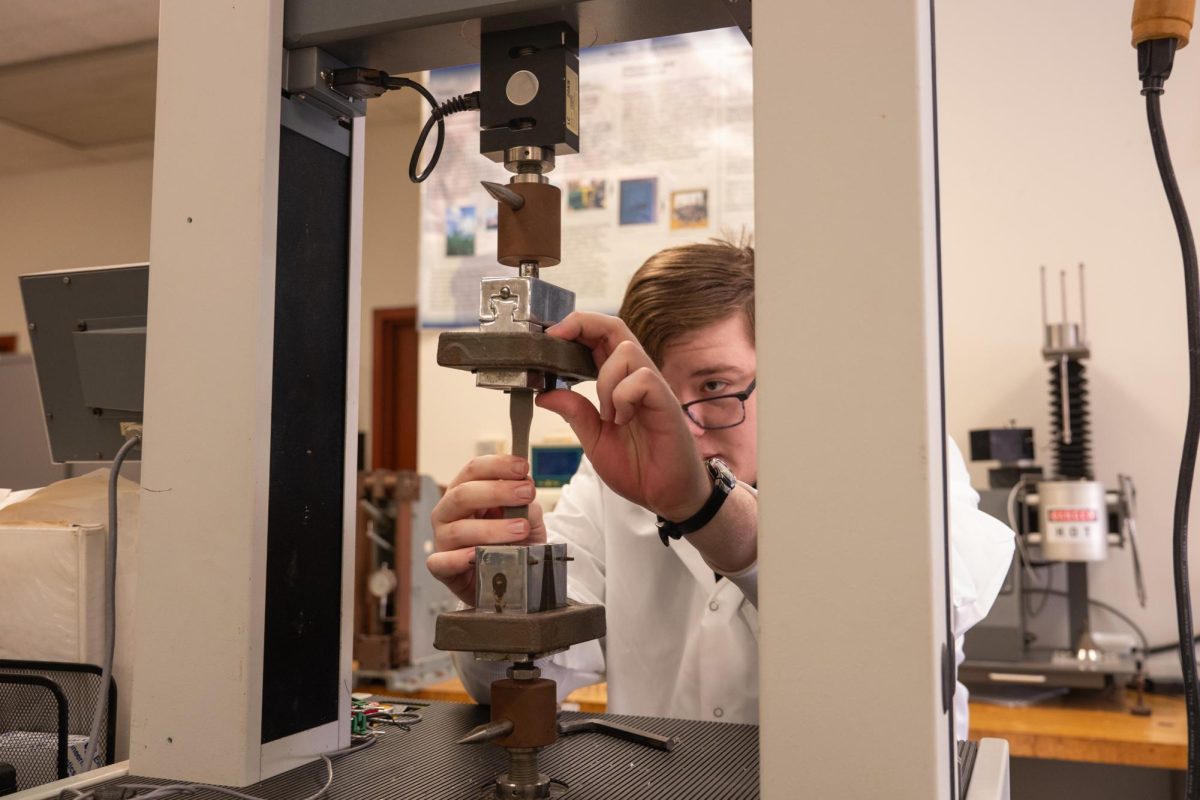
Ryan Mueller is a second year graduate mechanical engineering student as well as senior graduate assistant and mentor at the Bioplastics lab. Mueller enjoys working in the lab because of the collaborative environment as well as working toward sustainability.
“It’s given me a great opportunity to not only learn for myself, but get others involved and show them that this research is not only viable, but actually possible. When all these industries are kind of saying that there’s no financial way that this will happen, but whether it’s the collaboration between departments and being the lab between departments, I think that’s what we really are here,” Muller said.
For help with picking a subject to research, take a look at the various pages of the departments and faculty, and attend department-specific events to learn which professors are actively taking on research assistants.
Just like us students, professors tend to have busy schedules outside of the classroom. Although emailing the professors you see everyday can feel intimidating, many emphasize they not only expect but also welcome students to reach out for opportunities.
Sending a short and clear message that explains your background, interest and reason for reaching out can open the door to further conversation and give you an edge-in when looking for research opportunities.
Ian Janusz is a graduate engineering technology student and a research assistant in the Bioplastics lab. He believes that interested students should take initiative to seek out research opportunities.
“There’s, like, a gate, you have to talk to the faculty that’s responsible for the research,in large part,” Junusz said. “My biggest suggestion would be to just talk to faculty. Look at the look at the website. You can see who is responsible for what labs, and those are really the people who are going to be the decision makers of if you’re in research or not,”
On Campus Opportunity for Student Research Skills
Even if you aren’t sure what interests you just yet, one way to be proactive is to attend events offered by campus organizations, such as the Office of Student Engagement and Experiential Learning (OSEEL).
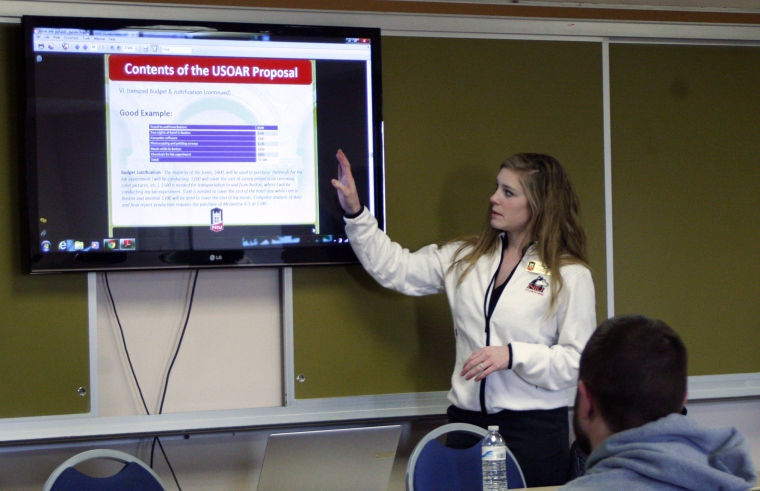
OSEEL offers free-to-attend events throughout both semesters for Huskies up until April, where they host their annual Conference of Undergraduate Research and Engagement (CURE) event allowing students the chance to showcase any research or achievement made throughout the academic year.
For more information on events from them, visit the OSEEL website.
Sarahjean Brown is a senior mechanical engineering student also working in the Bioplastics lab as an undergraduate researcher, Brown explained that people from all backgrounds are welcome as the team at the lab work on different projects.
“We’re constantly looking for new people because there’s so many projects to do. It’s not like we have one little niche subject and we’ve got too many people trying to get in on it, because there’s always new projects available for newcomers to come in and work on,” Brown said.
Another organization that works to help students navigate these early steps on campus is called Research Rookies.
Working hand-in-hand with OSEEL workshops, this group allows students to present their findings at the annual CURE event.
As universities continue expanding opportunities for both undergraduate and graduate students, the first and most important step is simply getting started. Check out the Research Rookies website for more information on what they do and how you can get involved in their program.
Throughout the process of choosing a field you’re genuinely interested in and reaching out to faculty and using campus resources, you should remember that the first step is building the confidence to get started.