At the “AI Tools for Research and Productivity workshop” attendees had the opportunity to learn about a variety of artificial intelligence (AI) tools and were shown a framework for how to utilize these tools ethically and responsibly.
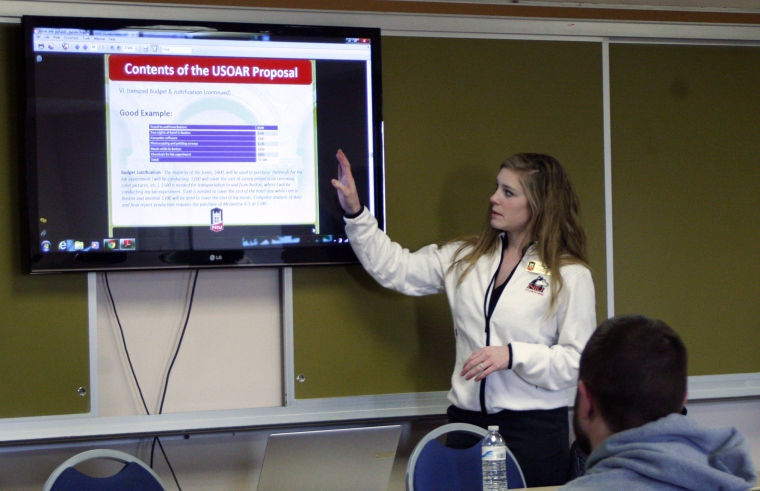
Student Success librarian Kimberly Shotick hosted the event at noon Tuesday virtually via Microsoft Teams.
This program was created by the Founders Memorial Library as part of their “Mission in the Stacks” series and is open to all. The series is dedicated to helping students utilize the library’s resources and navigate the areas of the library.
This specific workshop was designed primarily to help both undergraduate and graduate students that are interested in learning how to navigate artificial intelligence ethically to support their academic work.
Shotick stressed the importance of ethical usage of AI to supplement productivity, not replace it.
“I will get into the tools and show you to enhance your productivity and your research. However, I wanted to start with this point because it’s important that we approach the use of AI thoughtfully and critically,” Shotick said.
While AI can be used as a supplementary tool, Shotick said it should not be used to replace research completely.
Over reliance on AI could negatively impact critical and global thinking.
“Emerging evidence shows that it (AI) can have a negative impact on global thinking depending on how it’s used,” Shotick said.
Shotick emphasized the importance of doing your research and using AI as support for your research, not as a whole product. For instance, generative AI can be helpful with creating research questions and managing tasks.
“So in this area, generative AI can be used ethically and productively to help you get unstuck in moving past your block or come up with a research question, a strategy or timeline,” Shotick said.
During the workshop, participants were introduced to a variety of AI tools that can assist with the research process. The event was interactive and gave participants the chance to interact during the presentation through the Microsoft Teams interface.
Interactions included answering scenario based questions to test the attendees knowledge of AI tools and hands-on experience with a number of the research tools offered by the library. The tools are free for NIU students to access.
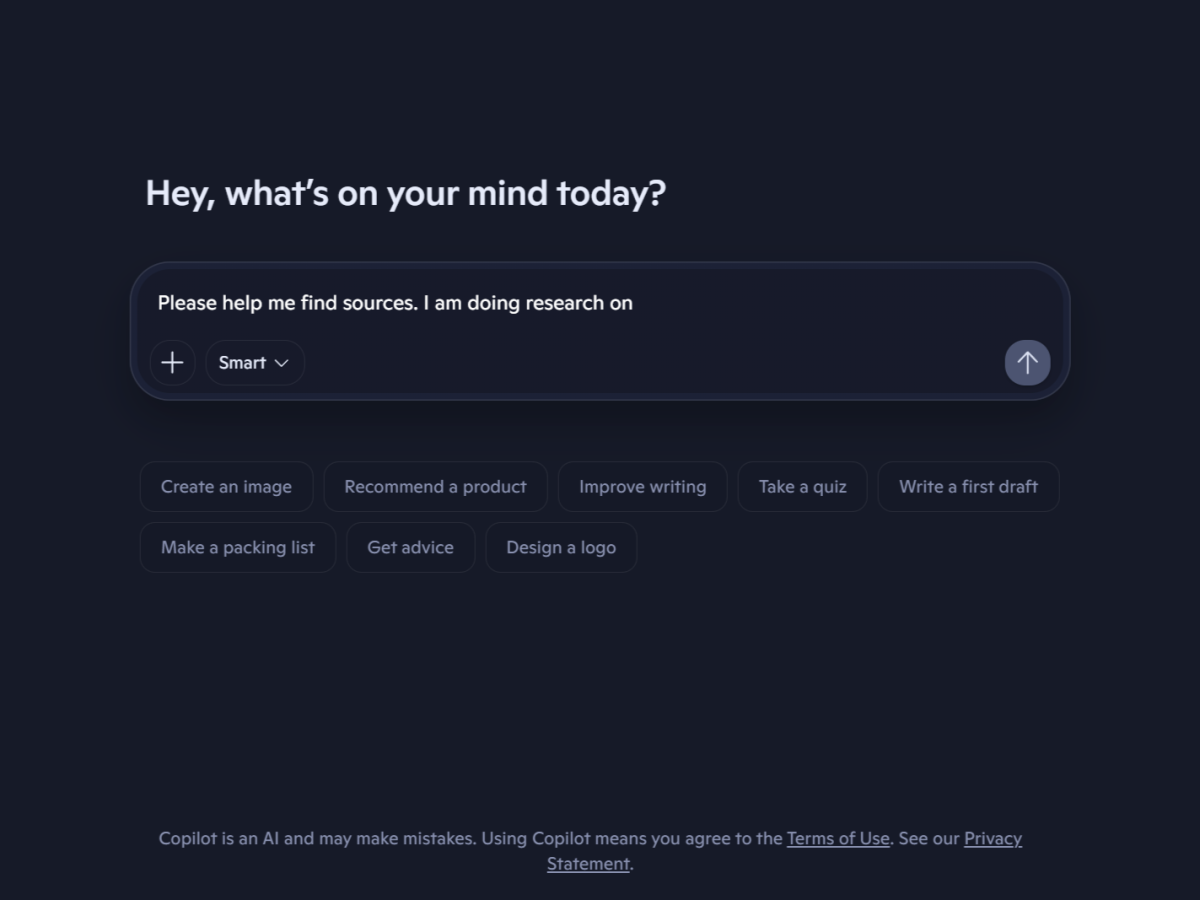
Some of the tools include: Microsoft Copilot – an AI tool that helps users research, write, summarize information and generate content by integrating large language models, Elicit – an AI research assistant that assists users with finding extracts from peer-reviewed documents, academic papers and helps organize key points for easy access, and Research Rabbit – a citation-based mapping tool used to generate visual networks of related papers to help users explore and visualize research and literature.
Shotick mentioned that using these tools can be beneficial for researchers when getting started.
“So this stuff can be really helpful when you are starting out with your research and you are feeling really overwhelmed and you don’t know how to get started,” Shotick said.
Participants also were given the chance to come up with practical strategies for utilizing these tools effectively.
In the end, Shotick showed appropriate and responsible ways to integrate AI into research practices without violating academic ethics or school policies.
“One of the outcomes of the webinar is to introduce a framework to teach ethical use of AI. The costs and benefits of AI use really depend on the tool and what it is used for,” Shotick said. “For instance, tools that are used in medical settings, with human oversight, to advance medical research versus a tool that ingests copyright protected music and then spits out an AI musical artist for Spotify – these are two very different uses with different costs and benefits.”
When considering the use of AI Shotick developed the “PEACEful Use of AI,” technique as an ethical framework for AI usage. This technique asks the user to validate their concerns by asking a number of questions.
NIU’s guidelines emphasize ethical usage of AI and require transparency and privacy consideration when using it. Usage of AI is recommended for only approved NIU applications.
NIU services and usage strongly encourages citation of the AI tool being utilized. Usage of generative AI to write student papers is discouraged, but the exact usage of AI varies depending on your professor or department. When in doubt check your syllabus.
For more information on these topics, contact Shotick at [email protected]. A copy of the lecture is available at the NIU Libraries YouTube page.